Vercel2026-09-26 05:53:27Vercel AI Gateway lists anonymous model Pixel Canary, matching GPT-6 Astra in Next.js evalsVercel AI Gateway has added an anonymous large language model called Pixel Canary and is offering it for free for a limited time while its identity remains undisclosed. Cline has also integrated the model at no cost. According to Vercel, Pixel Canary is aimed at coding, frontend work, and mobile app development, with support for both building new applications and refactoring existing code. In Vercel’s Next.js Agent Evals, the model posted a 90% baseline success rate, tying GPT 6 Astra (high) and beating Kimi K3’s 84%. When the Next.js official AGENTS.md documentation was provided, the success rate rose to 97%. The evaluation used real Next.js development tasks, with up to four attempts allowed for each task. A task was counted as passed if any one of those attempts succeeded.350
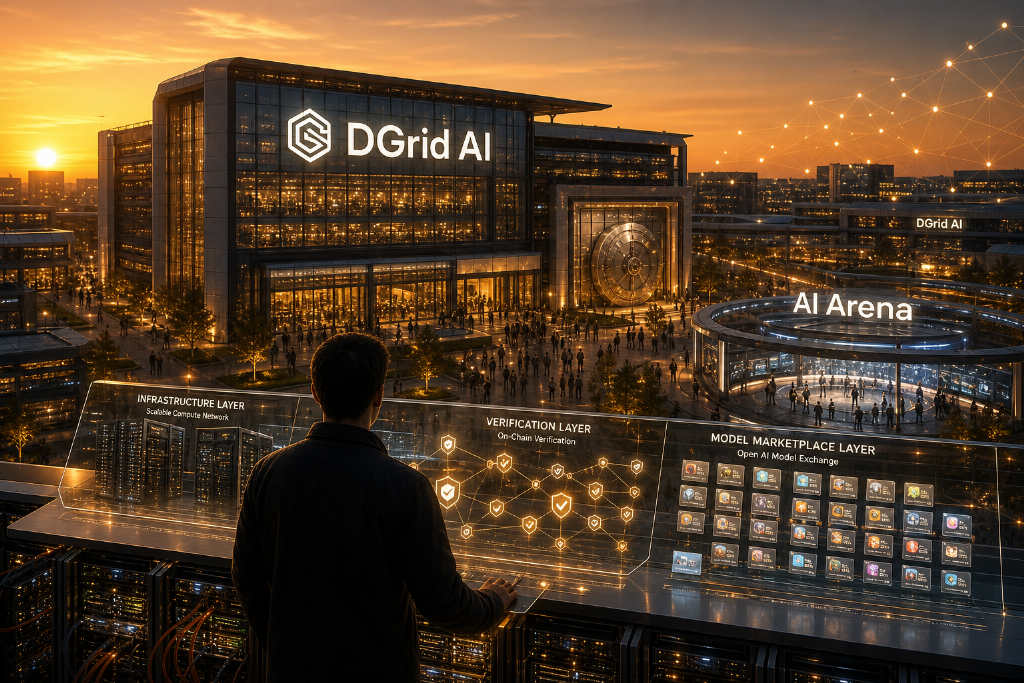
DGrid AI2026-08-19 07:48:56DGrid AI pitches on-chain verification and open markets as a new stack for AI infrastructureDGrid AI is positioning itself as a decentralized AI infrastructure protocol built around three pieces: a unified access layer for model calls, an on-chain quality verification system called Proof of Quality, and an open marketplace for model providers. In the report cited by Foresight, the project argues that today’s centralized AI platforms still leave developers and enterprises exposed to three structural problems: opaque service quality, vendor lock-in, and closed value distribution. The article says DGrid has already served more than 15,000 paying users as of the first half of 2026 and generated $23 million in verification revenue, while its AI Arena has drawn more than 500,000 users to take part in model evaluation. With the release of the $DGAI token model and an upcoming token generation event, DGrid is presented as moving from an AI service product toward a decentralized infrastructure protocol. The piece also details DGrid’s broader product lineup, including AI Gateway for developers, Model Marketplace for suppliers, AI Arena for preference and evaluation data, and DClaw for agent deployment and on-chain identity. It describes $DGAI as a coordination token for staking, payments, incentives, and governance, while framing the next test for the project around whether existing revenue and user activity can translate into sustained decentralized network usage.2580